Welcome to Tunnel Vision
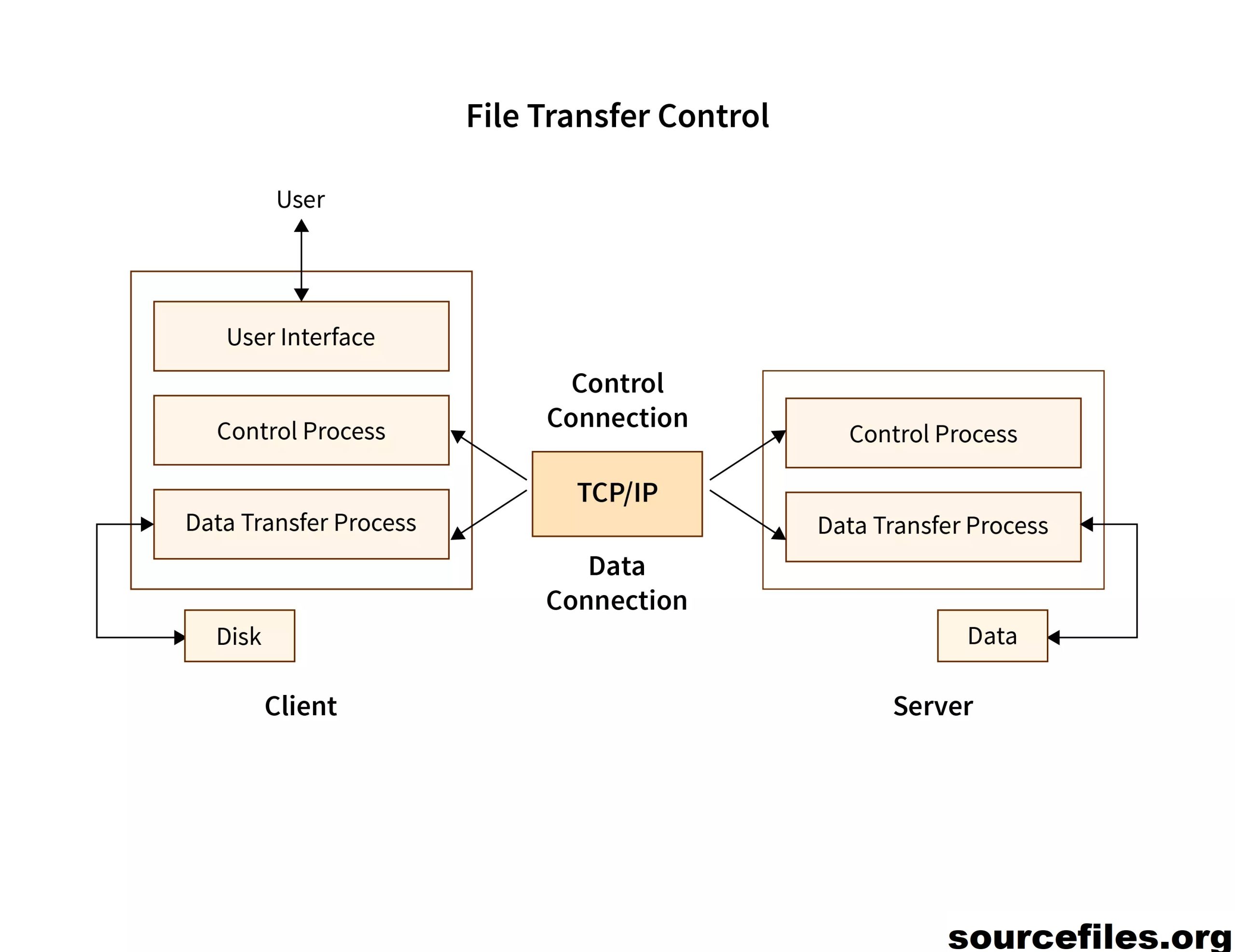
Tunnel Vision creates an encrypted network connection between computers on the internet, and allows you to forward arbitrary TCP/IP packets between two or more computers on the network. This connection is sometimes called a VPN (Virtual Private Network) because it serves as a drop-in replacement for the very expensive "old-style" private networks that some companies run between their offices.
This README file will give you quick information about how to install and use TV. For more detailed technical information, including an answer to the question "Why aren't you using IPsec?" you should read the file TECHINFO, which is included with the program. The latest version is always available from our web site:
http://www.worldvisions.ca/tunnelv/
This free software is brought to you by Worldvisions Computer Technology in Waterloo, Ontario, Canada. To find out about the license terms (the GNU Library General Public License, or LGPL) you should have a look at the file COPYING.LIB, which was included with this archive.
We'll probably create a mailing list for TV pretty soon. Until then, why not just write to us directly? We're really helpful people, really. Send e-mail to the following address:
Hey, export restrictions!
This program uses strong cryptography and it's illegal to export such simple mathematics from the United States and some other countries. It is, however, legal to import it into the United States and other countries. We're in Canada here, and it's legal to export strong cryptographic code from Canada.
Watch yourself though -- once imported into the U.S., it's still illegal to export crypto code again. Yes, it's weird, but you're better off giving people pointers to our Canadian web site than placing TV on an American site. You can do it, but do it at your own risk.
Also, since RSA holds a patent on their encryption algorithm, if you're in the U.S. you need to use the RSAREF library and not the international RSA library when you build SSLeay. That doesn't really affect how you use TV, but it's something you should know.
Okay, enough legal stuff.
So what does it do?
TV creates a "virtual" TCP/IP network (VPN) between two Tunnel Vision-capable sites on the internet. It uses the strongest encryption that's actually useful (1024-bit RSA and 128-bit Blowfish) to protect your data along the way. This connection between two TV servers is called a "tunnel."
Tunnel Vision is usually used on a router or gateway machine. When someone on your network wants to send data to someone on the other side of the tunnel, it sends through the default gateway (the TV server) like it normally would. You configure the TV server to send data through the tunnel instead of just forwarding it onto the internet.
What do I need?
You need two computers at different places on the internet, so that you can create a tunnel between them. If you don't have these, you can still make a tunnel on your own machine or your local network -- but it's pretty pointless.
This free release of Tunnel Vision is completely compatible with the one used in our Worldvisions Weaver gateway (http://www.worldvisions.ca), so if you want, one or both ends of the TV connection can be a Weaver. If both ends are using a Weaver gateway, you don't need this distribution. Read your Weaver documentation instead.
To set up Tunnel Vision on a Linux machine, you need:
- Linux 2.1.112 or higher with the "ethertap" and "netlink" devices configured. Sorry, we know it's unstable, but we needed to use the new features.
You need to load one ethertap kernel module for each tunnel you
want to open at a time. Many people will just use one tunnel, so
you only need one ethertap.
- The SSLeay library. The only one we've tested is version 0.9.0b,
so if you have problems, try switching to that version. SSLeay
does the actual low-level encryption for TV. Look at
ftp ftp.replay.com to see if you can find SSLeay.
- libc6, probably. We haven't tested it with anything else.
That's about all. If your SSLeay is installed in a nonstandard location, you may need to edit tunnelv/Makefile to point at your SSLeay includes and libraries.
Once all of these are installed, you should be able to just type:
make
In the top-level tunnelv directory and it should compile and run. Then run:
make install
To put the tunnelv program in /usr/local/bin. Edit the Makefile first if you want it somewhere else. Later, you can run:
make uninstall
And it will go away again.
Making a Connection
Okay, here's a basic idea of how it works. If you want the low-down nitty-gritty gory details, see the file TECHINFO in this directory.
Tunnel Vision doesn't actually use a password to identify itself to other TV servers or do encryption. It's been scientifically proven (by other people, not by me) that passwords provide pretty lousy security for encryption purposes, especially since people tend to pick really easy passwords.
Furthermore, sending any plaintext password across the internet is a rotten idea, since sneaky people can view it while in transit. We're trying to put together a virtual private network here.
So anyway, Tunnel Vision does its best to avoid sending passwords whenever possible, and even when it does send a password, it makes sure it's encrypted. Here's how:
- when you use TV for the first time, it generates a random 1024-bit RSA public/private key pair and stores it in /etc/tunnelv.conf.
- TV connects to the other end of the tunnel (or waits for a connection to arrive). When it makes a connection, each TV server sends the public side of its RSA key to the other side. We switch to RSA-encrypted communications right away.
- Now, RSA is pretty slow. So one end of the TV connection generates a secret, random 128-bit "Blowfish" key and sends it over the RSA-encrypted connection. Now we switch to the really fast and highly secure Blowfish encryption algorithm. Anyone with the Blowfish key can read the traffic, but the only people with the Blowfish key should be the two TV servers -- after all, we sent the Blowfish key across the link in an encrypted form.
- Now, we look at the RSA keys (I know, it seems backwards, but trust me on this). If the TV servers recognize each other's RSA key, that's it -- they're authenticated. There was no password ever sent, and all the keys we used were strongly random, so they're almost impossible for anyone to crack. At least, we hope so. No one has cracked them so far, anyway.
- If the TV servers don't recognize each other, then they request an authentication password from the other end. If you have a password listed in the config file, we send it across (encrypted using Blowfish, of course). Ever after, or until removing the RSA keys from /etc/tunnelv.conf, these two servers don't need a password to talk to each other. You can even take the password out of /etc/tunnelv.conf. Actually, you should, because passwords make rotten security. (Did we mention that using passwords is a bad way to do encryption? Well, it is. Bad, that is.)
Did you read all that? I doubt it. Okay, here's what you actually have to do. On both ends, create a file /etc/tunnelv.conf and enter the following lines:
[Tunnel Vision]
Magic Password = funky-doo
And PLEASE, change the password to something other than funky-doo, okay? Remember, it only makes sense if you put the the SAME password on both systems.
Now, on one end, running as root, do this:
tunnelv 1234
And on the other end, this:
tunnelv that-other-guy's-address 1234
Where "1234" is the port number you want to use (Worldvisions Weaver always uses 1234, so you might want to do so as well) and that-other-guy's-address is the address of the first computer, the one where you just ran "tunnelv 1234".
Now, hopefully, they connected okay. You know they did if they say "starting to exchange packets" or something similar. If it worked, get rid of the password (on BOTH ends) to increase your security. Remember, from now on, the servers can authenticate each other using the much more secure RSA algorithm. Take the "Magic Password" line out of /etc/tunnelv.conf.
Routing Packets
Now you have two computers connected together via a Tunnel Vision VPN. But does it work? Well, if you're lucky, yes, because TV makes a few guesses about your network setup. But if you're more normal than lucky, you need to fiddle with a few things first. Check these details:
- is the tap0 device up? Check by typing "ifconfig". If not, read the TV log messages to see if anything went wrong.
- is IP forwarding enabled in your kernel? No matter what you pick
in the kernel configuration, it's off by default in 2.1.x kernels.
You have to turn it on like this:
echo 1 >/proc/sys/net/ipv4/ip_forward
- is there a route (or more than one) through the tap0 interface? Check using the "route" command. If there is, and it looks right, then you're done. If not, you need to add one. Try this:
route add -net my-subnet-number netmask 255.255.255.0 tap0
That will route all traffic for my-subnet-number across the
tunnel. If you don't know what my-subnet-number is, or which
end needs this route command, or even what a route is, you should
go read some books or HOWTOs now. You'll probably never get
this working otherwise. Some excellent documentation is at the
Linux documentation project:
http://sunsite.unc.edu/linux/
Now, try to "ping" someone on the other side of the VPN. You should get a ping response back. You should also see various messages coming out of Tunnel Vision - read them. If you don't see anything, you may have configured something incorrectly. Re-read the above instructions, and if it still doesn't work, please contact us.
Bringing down the connection
Just kill the tunnelv program on one or both ends. It'll come down safely and clean up after itself.
Contact us!
This is an early release of Tunnel Vision for Linux. It's well-tested in our controlled Worldvisions Weaver environment, but lots of bugs can appear when you run it in different Unix settings. If you have problems, or even if you have success, please let us know at the address at the top of this file.
Have fun with it!
And remember:
If it looks like a lemon, and smells like a lemon,
Why are you eating it? It's a lemon, for heaven's sake!