SourceFiles.org - Use the Source, Luke
Home | Register | News | Forums | Guide | MyLinks | Bookmark

Related Sites

Latest News
  General News
  Reviews
  Press Releases
  Software
  Hardware
  Security
  Tutorials
  Off Topic


Back to files

HTun: IP-over-HTTP tunnelling VPN network interface

ABOUT

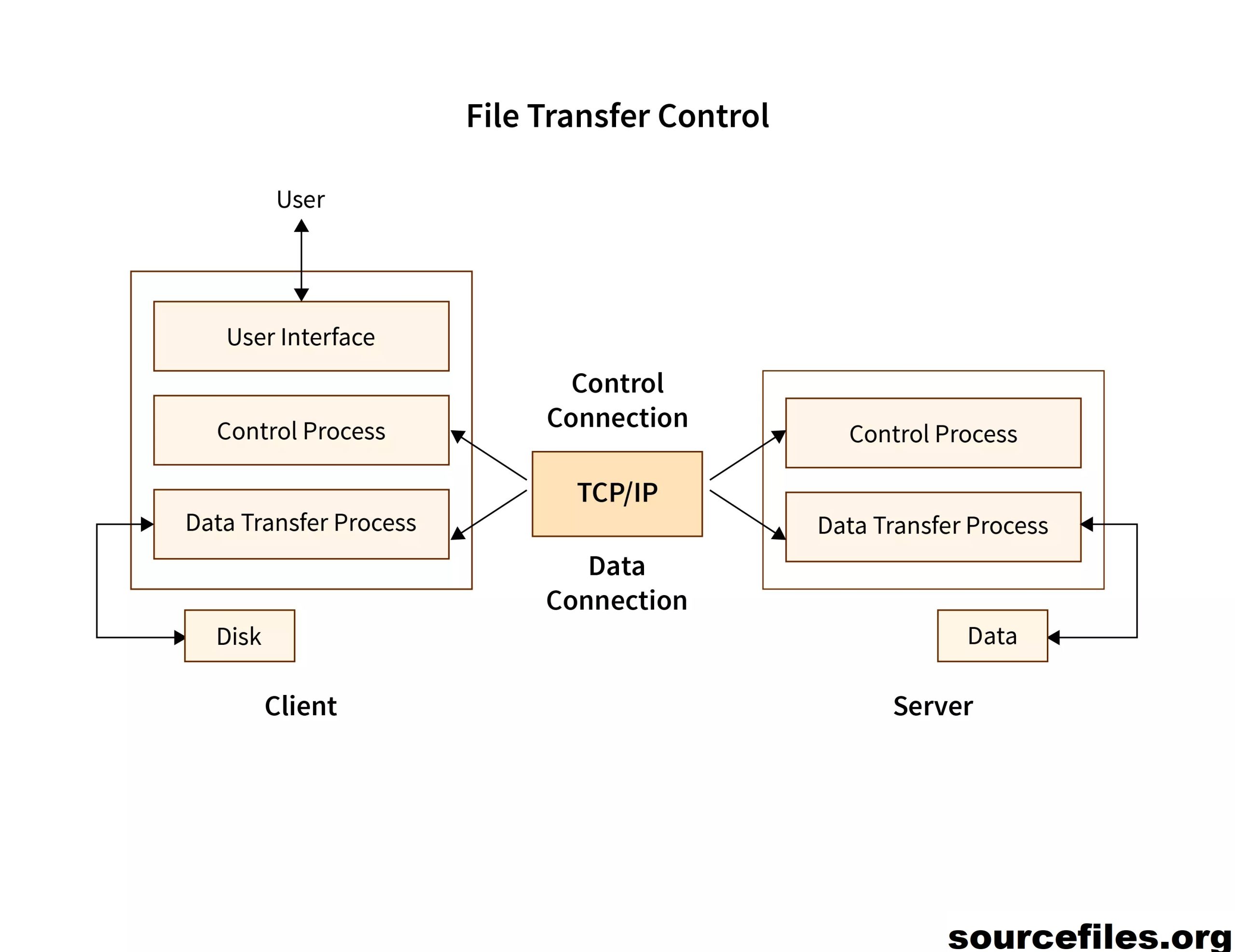
HTun is a tool to allow you to create a fully bidirectional IP VPN over an HTTP proxy or just over port 80, allowing you to bypass restrictive firewalls and use any service you desire.

HTun creates an point-to-point virtual IP network over HTTP by encapsulating IP traffic into valid HTTP requests. The HTun server runs on a host with an unrestricted Internet connection. It listens on a common webserver port (80 or 443) and accepts HTun client connections. The HTun client daemon runs from within a restrictive network environment, communicating with the HTun server over an HTTP proxy.

Written by:
Moshe Jacobson <moshe at runslinux dot net> and Ola Nordström <ola at triblock dot com> under Russell Clark <rjc at cc dot gatech dot edu>.

COMPILING

Compiling HTun should be fairly straightforward:

cd src
make all
cp htund /usr/local/bin
cp ../doc/htund.conf /etc

To compile with debug support, type "make debug" instead of "make all".

Debug support slows down the program, but provides the ability to log debug statements to the logfile through use of the -d commandline option or the "debug yes" config file option. You should use debug mode if you're trying to report a bug.

CONFIGURING THE TUN DEVICE

HTun uses the Unversal TUN/TAP module (tun.o) available in the Linux kernel. Therefore, you must enable the option in the kernel configuration under "Network Device Support" --> "Universal TUN/TAP device driver support". It is recommended that you compile it as a module rather than statically.

You must also create the TUN device file. You may call it whatever you want, but for this example, we will assume you are creating it as /dev/net/tun. Use the mknod command as follows to create the device with major number 10 and minor number 200:

$ mknod /dev/net/tun c 10 200

Additionally, to cause the device driver to be automatically loaded on request, you must place the following line into your /etc/modules.conf:

alias char-major-10-200 tun

Once you have made that modification, run depmod -a to reconfigure the module dependencies.

CONFIGURING

All HTun options can be set from the configuration file. The config file has the following format:

options {

universal options
}
[client|server] {

client- or server-specific options
}

The valid options are as follows. The required options are marked with an asterisk (*), and next to each option, the default value, if any, is shown in brackets.

universal options:

    logfile {filename}              [logging turned off]
        This is the logfile to which HTun writes errors and information. It is
        highly suggested that you enable a logfile so that in case of an
        error, you may determine the cause.
  * tunfile {filename}              []
        This is the name of the tun device file you created earlier (see the
        CONFIGURING THE TUN DEVICE section).
    debug [yes|no]                  [no]
        This tells HTun whether or not to log debug information into its
        logfile. This is only useful for extreme debugging circumstances, and
        produces a lot of output. However, it may help someone out there :)

client options:

    do_routing [yes|no]             [no]
        When do_routing is set to yes, HTun modifies your route table so that
        your default gateway becomes the HTun server, and all Internet-bound
        data is automatically sent through the HTun interface. The route
        tables are automatically restored when HTun is killed cleanly.
        This is usually desirable, as it works well in most circumstances.
  * protocol [1|2]                  []
        This option is a bit strange, but it is here due to the fact that HTun
        came about as a research project. We developed two protocols, one
        half-duplex (protocol 1) and one full-duplex (protocol 2). 
        The half-duplex protocol can achieve better response times, but is
        more erratic, especially inbound. The full-duplex protocol is very
        consistent with response times, but they are a bit higher, generally.
        My suggestion is: start with protocol 2 (make sure you set
        secondary_server_port as well, in this case). If it doesn't work, then
        go back to protocol 1.
  * proxy_ip [dotted.ip.address | hostname]    []
        This is the IP address or hostname of your web proxy server through
        which you are tunneling. It must be on your local subnet. If not, you
        must manually add a static host route entry in your routing table so
        that you may route to it without going through the HTun interface.  If
        you are not using a web proxy server, and only wish to tunnel over
        HTTP on port 80 (communicating directly with the server), place the
        server's IP address here.
  * proxy_port [port]               []
        This is the port on which your proxy server listens for requests. For
        the squid proxy server, this is usually 3128. For many other proxy
        servers, it can be 8000. Ask your system administrator for a more
        definitive answer.
    proxy_user [username]
        This is the username by which you wish to authenticate yourself on the
        proxy server. This is only necessary if your proxy server requires
        authentication. If it does not, you should not insert this line into
        the config file, as it creates extra HTTP overhead to support it.
    proxy_pass [password]
        This is the password for the user given in proxy_user, by which you
        wish to authenticate yourself on the proxy server. Although it may be
        true that this password contains a space, HTun does not support
        passwords with whitespace in them. If you do have whitespace in your
        password, you will need to change the password to be able to use it
        with HTun. This option is only necessary if your proxy server requires
        authentication.  If it does not, you should not insert this line into
        the config file, as it creates extra HTTP overhead to support it.
  * server_ip [dotted.ip.address | hostname]   []
        This is the real IP address or hostname of the HTun server machine.
        This is the address sent to the proxy in all requests, so the proxy
        must be able to access it.
  * server_port [port]              []
        This is the port on which the HTun server daemon is listening.
        Usually, the server will be listening on port 80, 8080, or 8000, as
        the goal is to have the HTun server seem like a webserver.
  * secondary_server_port [port]    []
        This is only required if you are using protocol 2. Because the
        protocol is full duplex, the HTun client must open two channels to
        different ports on the server (If it attempts to open two connections
        to the same port, many proxy servers will interleave the requests into
        one connection, rendering the connection useless). Usually, the
        secondary port will be something like 8080 or 8000, depending on what
        the proxy server allows access to.
  * if_name [network device name]   []
        Because the client must have a unique identifier to give to the
        server, it uses the MAC address of a physical Ethernet interface,
        whose name you must provide here. eth0 usually works.
   iprange [network/maskbits]      []
        This tells the HTun client what IP addresses it may choose from when
        picking an address for its virtual point-to-point interface. You must
        provide a range of IP addresses so that the server can negotiate an
        address that it is not using either. For example, if you are not using
        the 10..*. network, you should place 10.0.0.0/8 as your iprange. If
        you're not using 192.168..*, you should place 192.168.0.0/16 there.
        You may also have more than one iprange statement, for maximum
        flexibility.

The following options are only for those who wish to tinker, and need not be touched otherwise. However, the ones marked with a * must be present in the config file anyway:

  • max_poll_interval [seconds] []

    Only used with protocol 1. Protocol 1 involves regular polling of the server to determine if the server as any data to return to the client. Polling becomes less and less frequent as more and more time passes without sending or receiving data. To place an upper bound on the number of seconds between polls to the server, set max_poll_interval. 30 seconds is a reasonable value here.

  • min_poll_interval_msec [msec]

    Only used with Protocol 1. This is the number of milliseconds that the client should wait before the first poll to the server. A lower value here will lead to lower latency, but more overhead. Experiment to see what you think is best. I suggest 200 as a starting point.

  • poll_backoff_rate [integer]

    Only used with protocol 1. This indicates the number of times that protocol 1 should poll at each time interval, thus determining how fast it backs off in terms of poll frequency. Higher numbers here cause a slower backoff, but much more overhead in general. values from 1 to 3 are reasonable.

  • ack_wait [seconds]

    Only used with protocol 2. Protocol 2 uses two channels, one for sending data, and the other for receiving. The receive channel simply makes POST requests and waits for responses containing IP packets. However, it won't wait for data forever, because perhaps there was a problem that it didn't know about. Therefore, it is best that the client make a new poll request on the receive channel every ack_wait seconds.

  • connect_tries 2

    The client will try the initial connection to the server this many times before giving up.

  • reconnect_tries 4

    In the event of a disconnection from the server, the client will try reconnecting to the server this many times before giving up.

  • reconnect_sleep_sec 30

    How many seconds the client should wait between reconnect retries.

  • channel_2_idle_allow 30

    The maximum number of seconds we'll allow the server to sit idle before responding to the client request, in proto 2 channel 2. Setting this higher cuts down on unnecessary chatter over the network, but your proxy may time out waiting for the server to respond if you set it too high. Experiment to see what your proxy will allow for.

Server Options (all are mandatory):

max_clients [integer]

        Maximum number of clients that may be connected to the server at any
        given time.

server_port [port]
secondary_server_port [port]

        The server must listen on two ports for protocol 2 to operate. Set
        these two options to different values. Suggested ports to choose from
        are 80, 8000, and 8080.
    iprange [network/maskbits]
        This tells the HTun server what IP addresses it may choose from when
        picking an address for its virtual point-to-point interface. You must
        provide a range of IP addresses so that the client can negotiate an
        address that it is not using either. For example, if you are not using
        the 10.*.*. network, you should place 10.0.0.0/8 as your iprange. If
        you're not using 192.168..*, you should place 192.168.0.0/16 there.
        You may also have more than one iprange statement, for maximum
        flexibility.

redirect_host [hostname]
redirect_port [port]

        These two directives together tell HTun where to redirect non-HTun
        requests received by the HTun server.  The idea is that HTun will be 
        pretending to be a webserver, so if someone wants to find out what all
        this proxy traffic is all about, they will visit the HTun server with
        their web browser, and HTun will invisibly redirect their request to a
        legitimate web server, and proxy the response back to them, so they
        are led to believe that the HTun server is a legitimate webserver.
        The redirect_host would be something of the form "www.microsoft.com".
        The port is the port on which the remote webserver is running
        (usually, this would be port 80)

The following options are for expert users only. You need not mess with

them

min_nack_delay
clidata_timeout [seconds]

        If a client does not close the communication channel cleanly, its
        state data will be removed from the server after clidata_timeout
        seconds. This should generally be set high enough that if the client
        disconnects from a network timeout or something, that it will be able
        to reconnect soon enough that its data will be maintained, and it can
        pick up its dropped session without losing data or changing its IP
        address.
    max_pending [integer]
        Masimum number of pending clients that may be connected. These are
        clients that aren't being serviced but are connected. I think. Just
        leave it at some value like 40 and forget about it :)
    idle_disconnect [seconds]
        If a client connects but sends no request for idle_disconnect seconds,
        it is disconnected by the server. This is only mandatory because we
        haven't gotten around to making htun assign a default. 1800 seconds is
        a good value to use here.
    min_nack_delay [msec]
        Protocol 1 only. The server will wait at least this many msec before
        replying to the client POST requests. This causes server response data
        to be more likely to be included in the immediate response from the
        server to the client, causing lower response times. Set this too high
        or too low and your response times will rise on average.
    packet_count_threshold [integer]
        Proto 1 only. If there are at least packet_count_threshold packets
        queued to send to the client, the server will respond to the client
        immediately. In Linux, the limit to the number of TCP packets that can
        be sent without an ACK response is (I believe) about 6 or 7, so any
        value above that will have no effect on TCP applications.
    packet_max_interval [msec]
        Proto 1 only. If there have been no packets queued to send to the
        client in packet_max_interval msec, the server will send the response
        to the client immediately.

Once you have finished writing your configuration file, move it to /etc/htund.conf. If you wish to place it elsewhere, you will have to use the -c option on the htun commandline.

INVOKING

The HTun daemon must be initalized as the server on the machine with an unrestricted Internet connection, and as a client on the machines with restricted connections. The mode is set in the config file, not on the commandline. The simplest invocation of htund is without any parameters at all:

$ htund
HTun daemon backgrounding . . .
$

But you may see all the commandline options available with htund -h:

$ htund -h

      Htun 0.1
      Usage: htund [OPTION]...
      Options:
         -c cfgfile   Use cfgfile as the config file.
         -f           Run htund in the foreground.
         -v           Print the htund version information and exit.
         -h           Print usage information and exit.
         -t tunfile   Use tunfile as the tun device file.
         -l logfile   Use logfile as the log output file.
                       Give - for stdout; this implies -f.
         -r           Do not alter default route.
         -p port      Set server port to given value
         -o           cOnfigtest only, check config syntax

All commandline options specified override the corresponding options in the configuration file, if any.

USING

Once the client and server have both been invoked, and are communicating properly (see the log file for details), you should be able to see what IP address you have been assigned and what address the server is using by typing ifconfig at the commandline. Look for the tun0 interface, and that should contain the IP addresses.

Sending a SIGUSR1 kill signal to the server will generate some interesting statistics, such as information on the connected clients, to the logfile.

Sending a SIGHUP kill signal to the htund will cause it to reload its configuration file and put the new changes into effect. For the client side, this may mean reconnecting to the server. For the server side, the currently connected clients may not see the changes until they reconnect.

Provided you have told htun to set up the default route ("do_routing yes" in the config file), you should not have to worry about the IP addresses of the virtual interface, though. You should just be able to begin using it.

You will also want to set up IP masquerading on the server side so that traffic from the TUN interface will be routed properly. Otherwise, you will be able to communicate only with the HTun server machine. Instructions on setting up IP masquerading are beyond the scope of this document, and can be found at documentation sites such as http://www.linuxdoc.org.

SUGGESTIONS

I welcome any suggestions, bug reports, etc. that you may have about HTun. Just go to http://htun.runslinux.net/contact.html and submit them to us.

OBTAINING

The latest version of HTun is always available at http://htun.runslinux.net


Other Sites

Discussion Groups
  Beginners
  Distributions
  Networking / Security
  Software
  PDAs

About | FAQ | Privacy | Awards | Contact
Comments to the webmaster are welcome.
Copyright 2006 Sourcefiles.org All rights reserved.